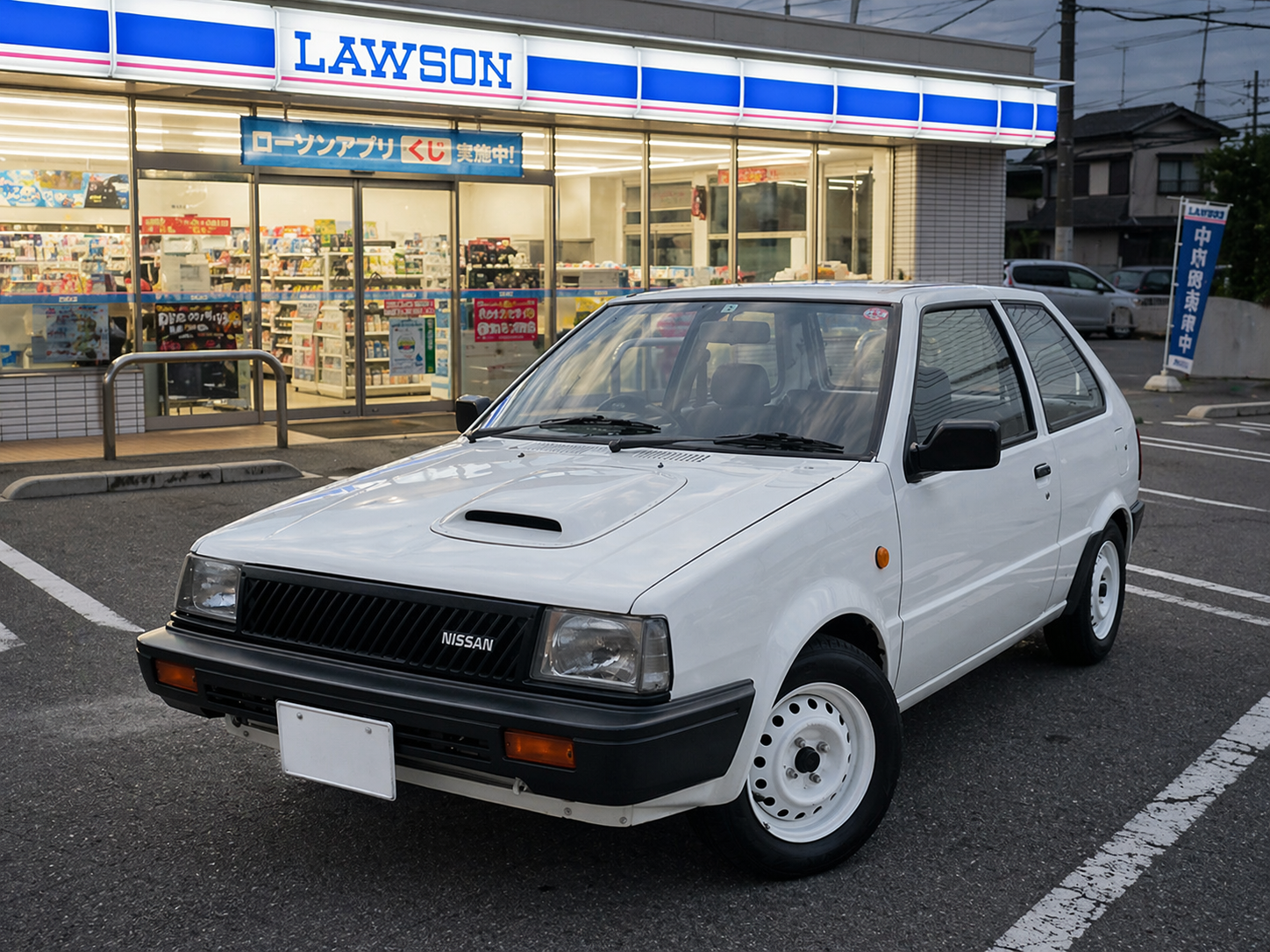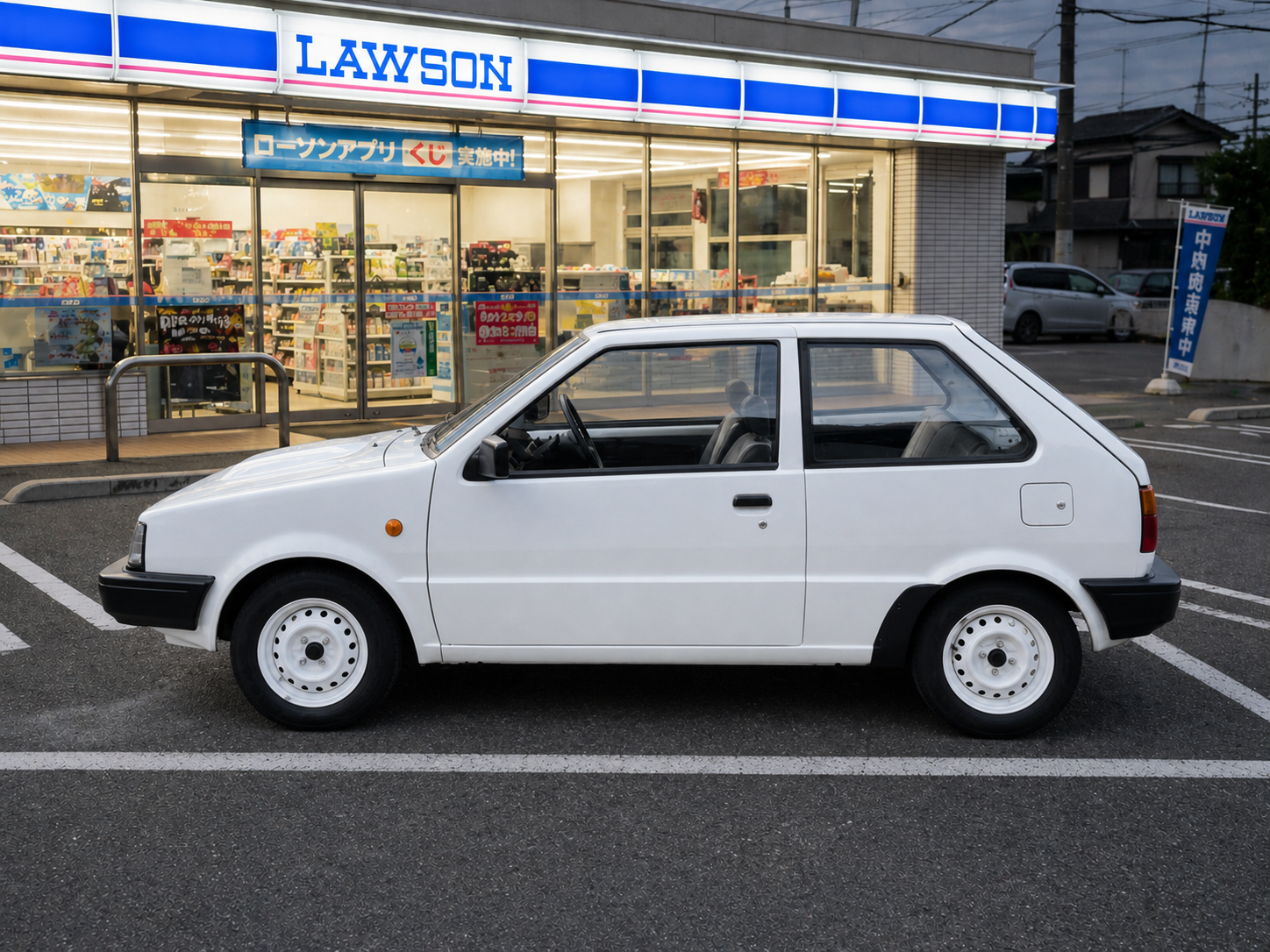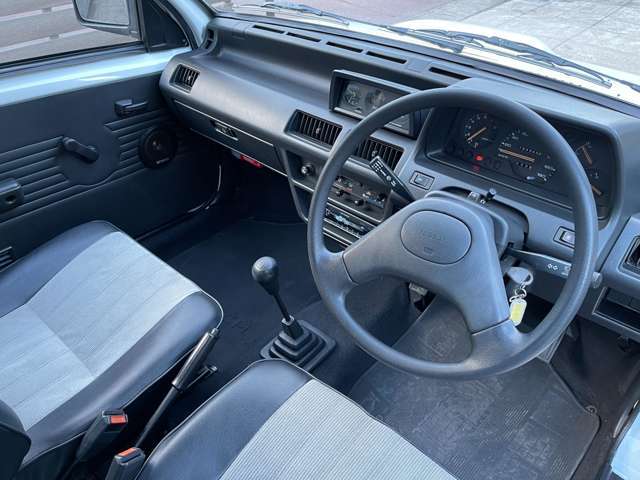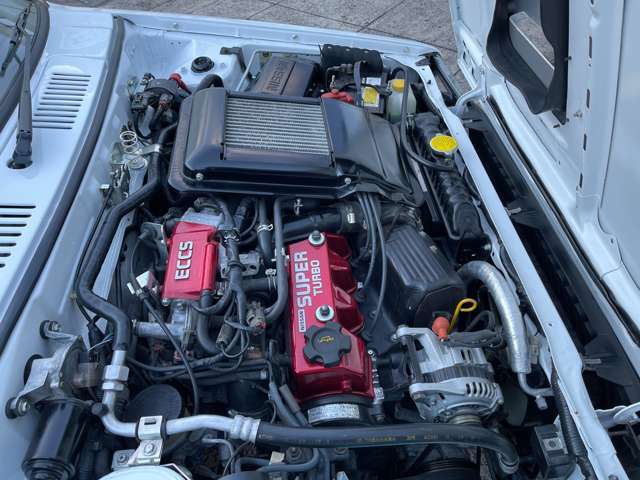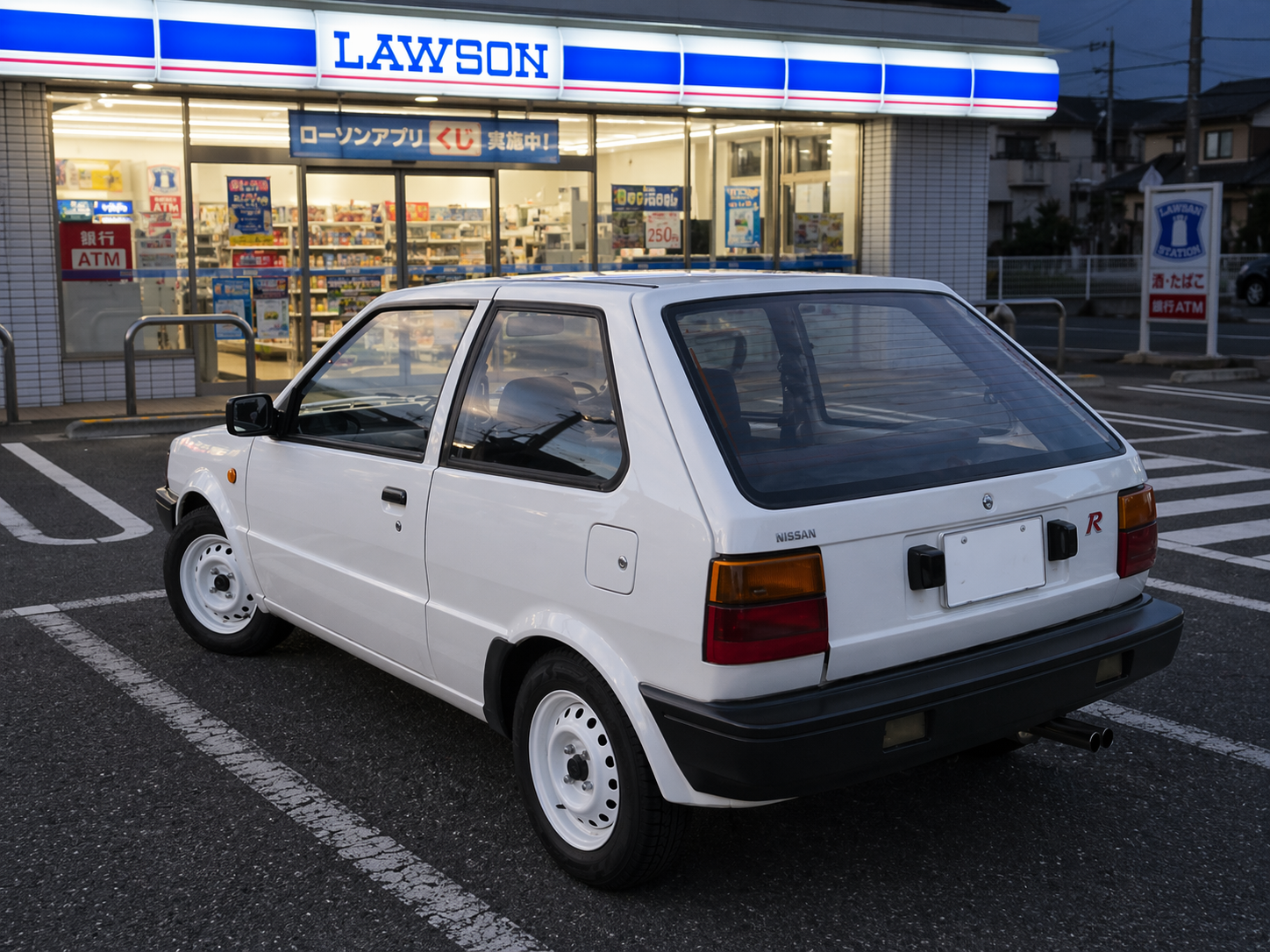
The 1991 Nissan March R is a car many people underestimate.
At first glance, it looks like a small hatchback. Compact, simple, and almost harmless. But the March R was not built like an ordinary economy car.
Its base was an entry-level car designed by Italian designer Giorgetto Giugiaro. That makes the foundation itself interesting: a practical compact car with clean European-influenced proportions, later transformed into something far more specialized.
The March R appeared during a period when motorsport enthusiasm in Japan was especially strong. It was developed as a homologation model for the All Japan Rally Championship, which explains why it feels so different from a normal small hatchback.
Production was extremely limited, with only around 800 units built.
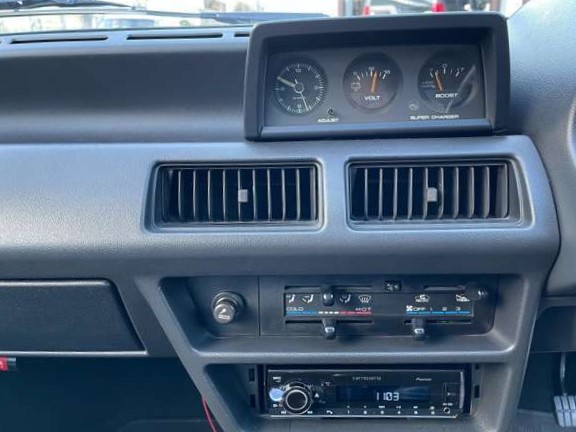
Its engine is only 930cc, yet it uses both a supercharger and a turbocharger to produce 110 horsepower. Combined with a curb weight of around 770kg, the result is a power-to-weight ratio that makes the car far more serious than its size suggests.
On paper, that is already enough to surprise many buyers.
But the numbers are not the most interesting part.
The engine was developed at Nissan’s Ogikubo engineering center in Tokyo. That location matters because the engineering culture behind it traces back to Nakajima Aircraft, the company known for aircraft engine development, including engines connected to the Zero fighter.
That history gives the March R a different kind of meaning.
This car is not just a technical experiment. It reflects a specific engineering mindset: lightweight, compact, over-engineered, and pushed further than most people would expect from a small hatchback.
In that sense, the Nissan March R feels like a “Zero fighter” in hatchback form.
It takes a modest base and turns it into something unusually intense. Not through size or luxury, but through mechanical ambition, efficiency, and motorsport purpose. It is a small car with a much bigger engineering story behind it.
That is also why ownership requires the right perspective.
A car like this is not something to judge only by performance numbers or rarity. Even if it has been restored, the March R still demands commitment. Its twincharged setup, age, limited production, and specialized nature mean that maintenance, parts sourcing, and proper understanding all matter.
For collectors, that distinction is important.
The 1991 Nissan March R is not simply a fast small hatchback. It is a rare expression of Nissan’s experimental engineering culture, built during a time when Japanese manufacturers were willing to push compact cars far beyond normal expectations.
So the question is not only whether you are looking for performance.
The real question is whether you understand what it takes to own something like this.
Understand before you decide.
*This commercial video is for the March Super Turbo, a sibling car.