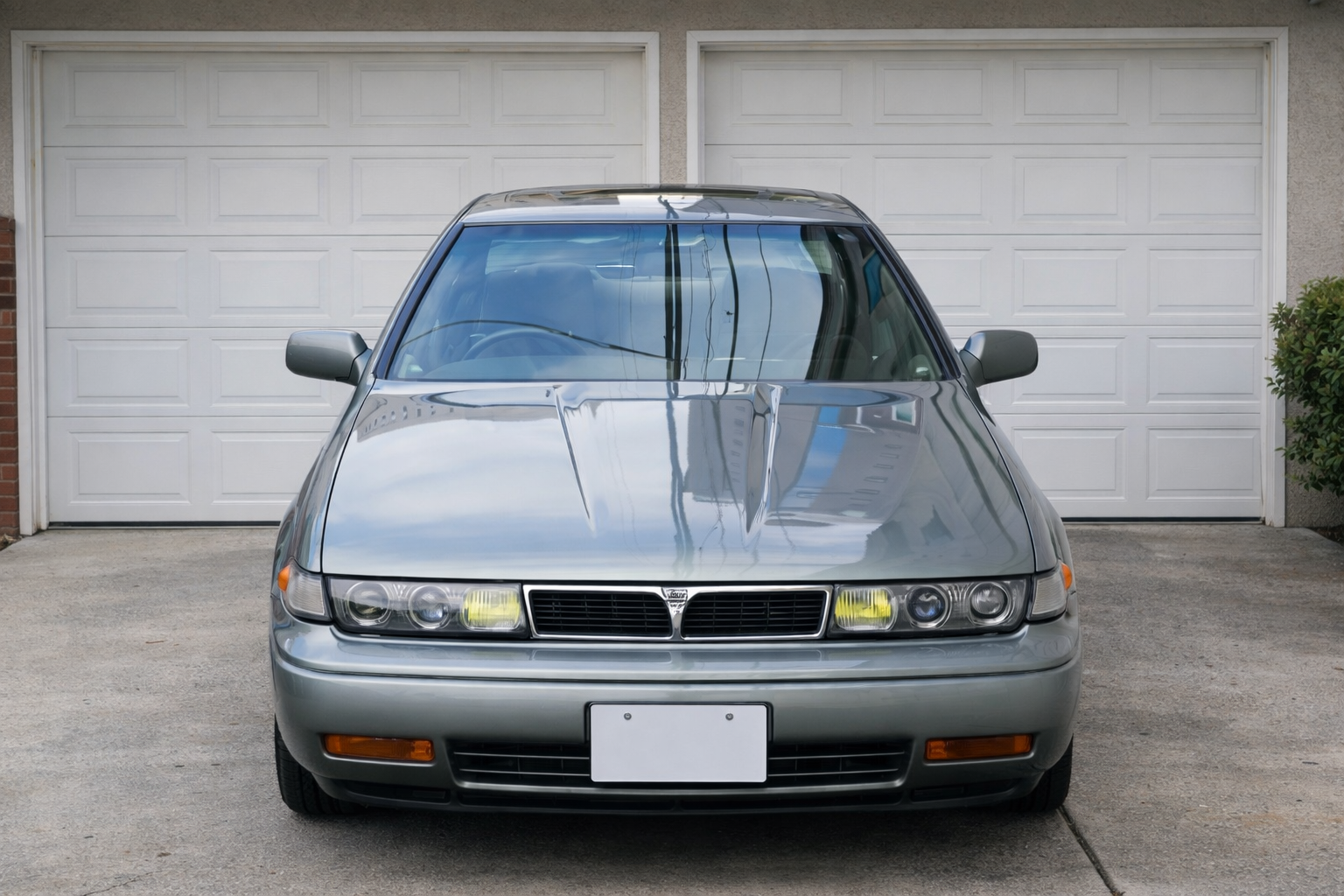
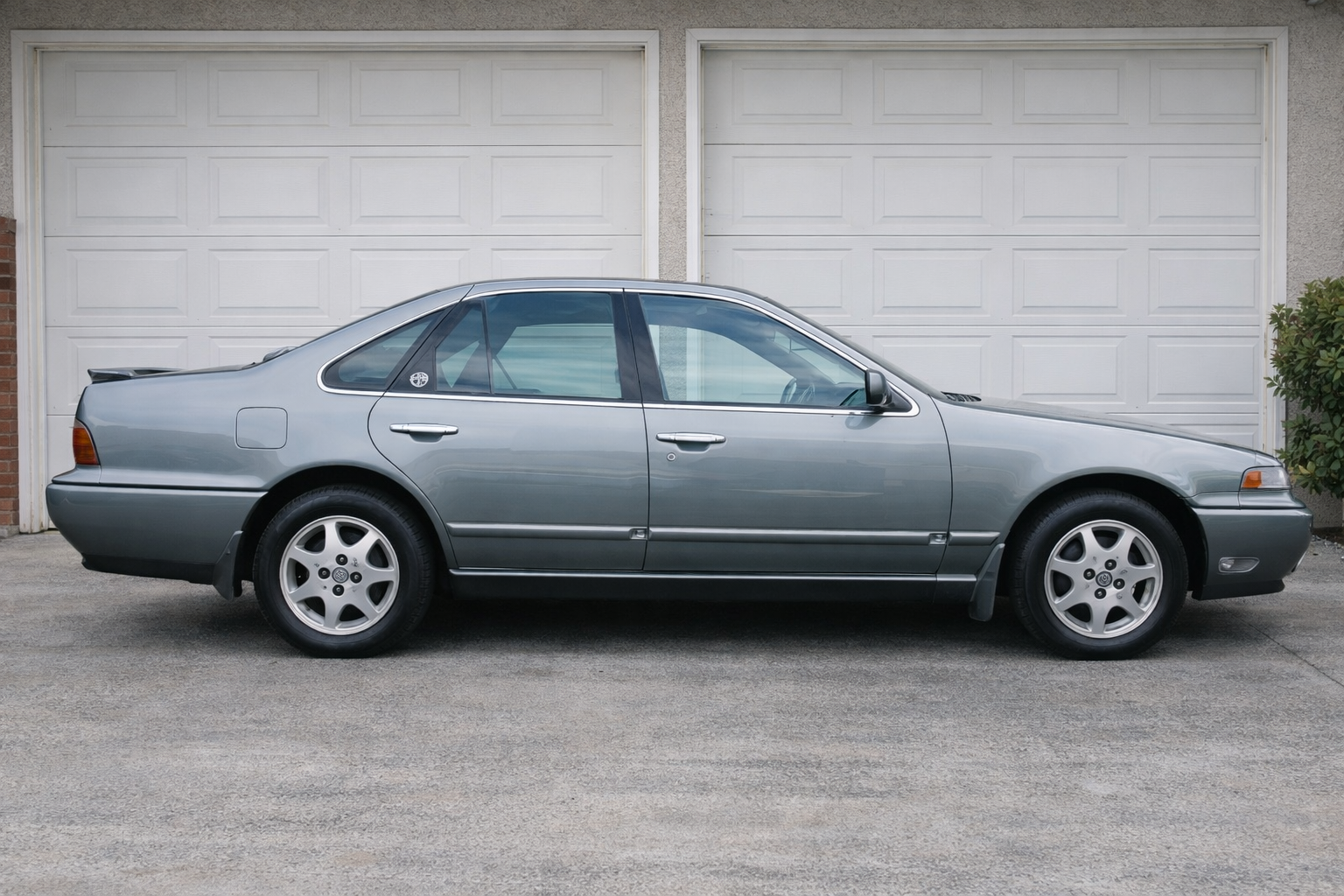
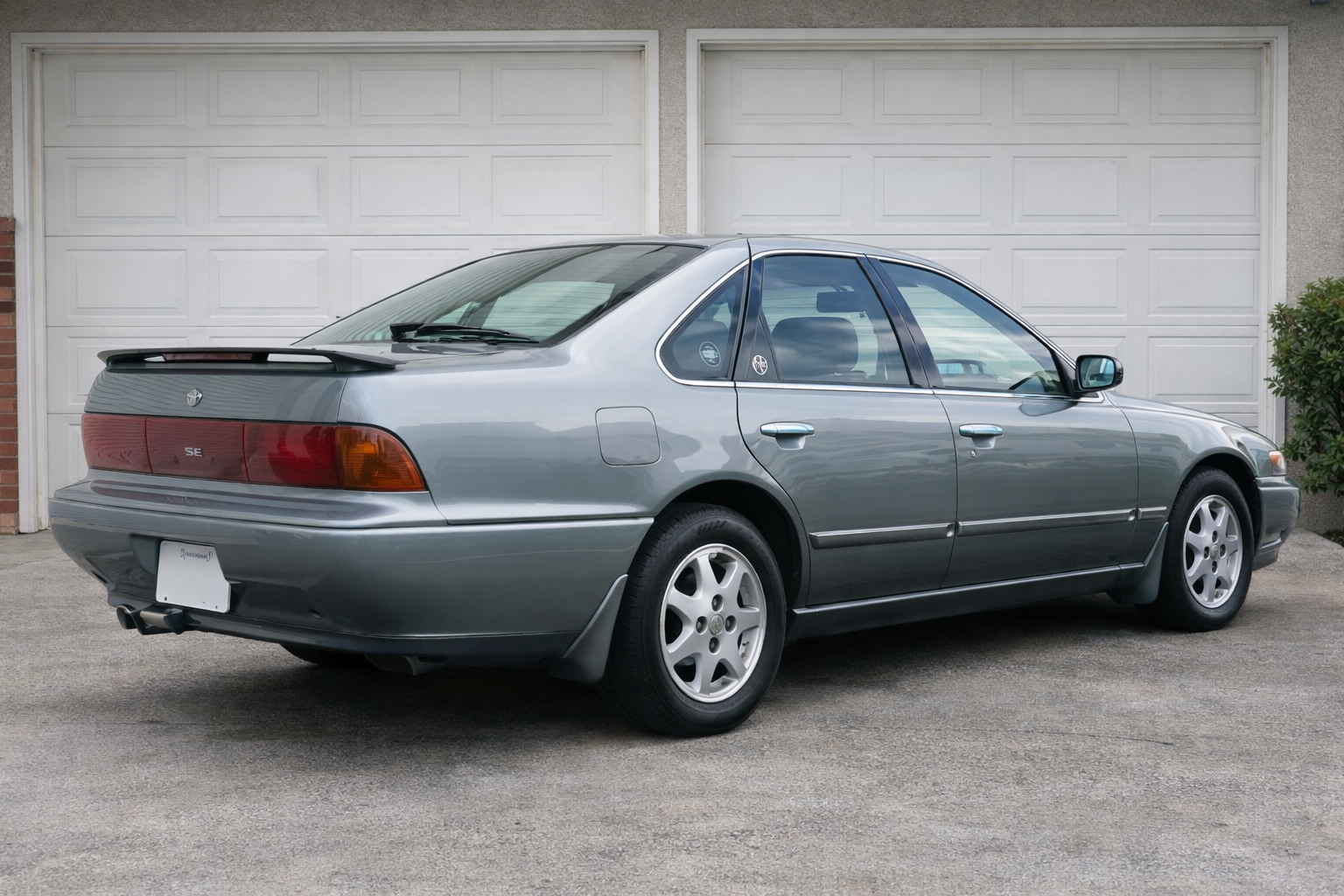
The 1992 Nissan Cefiro A31 is one of the most overlooked cars from Japan’s early 1990s performance era.
Many JDM enthusiasts focus on the Nissan Skyline R32. That is understandable. The R32 became an icon, especially because of its performance reputation and motorsport connection. But it was not the only important Nissan built on that foundation.
The Nissan Laurel C33 and the A31 Cefiro shared related underpinnings with the Skyline, but they were created with very different intentions.
The Cefiro was not designed purely as a performance car.
It was designed around balance. It offered rear-wheel-drive dynamics, a refined sedan body, and a more relaxed personality than the Skyline. Instead of chasing attention through obvious performance image, the Cefiro presented a quieter and more thoughtful kind of appeal.
Its design is also an important part of the story.
The A31 Cefiro was shaped by Satoshi Wada, who later worked on cars such as the Audi A6 C6 and Volkswagen Golf Mk5. That background helps explain why the Cefiro still feels visually composed today. It is not aggressive or overly decorative. It has a clean, calm presence that reflects a different design philosophy.
But the Cefiro was more than its platform or styling.
It carried an idea.
At the time, copywriter Shigesato Itoi gave the car a simple phrase: “Eat. Sleep. Play.”
That line positioned the Cefiro not just as transportation, but as part of everyday life. It suggested that a car could be more than a machine for speed or status. It could be a space, a companion, and a way to move through ordinary moments with ease.
That idea also appeared clearly in its advertising.
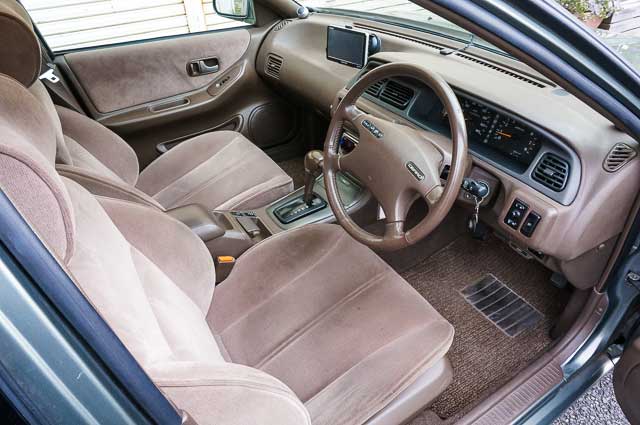
In one well-known commercial, singer Yosui Inoue sits in the passenger seat, turns slightly, and asks, “Are you doing well?”
There were no performance figures. No claims about speed, power, or superiority. Just a quiet moment and a completely different definition of what a car could be.
That is what makes the Nissan Cefiro A31 so interesting today.
It is not simply an alternative to the Skyline. It is a different perspective. It shares part of the same Nissan engineering background, but it expresses that foundation in a more subtle and balanced way.
For collectors, that difference matters.
The A31 Cefiro offers a way to experience 1990s Nissan culture without following the most obvious path. It has the mechanical layout enthusiasts appreciate, the design depth collectors value, and the cultural background that makes it more than just another JDM sedan.
So the question is not only why the Cefiro is still overlooked.
The real question is what kind of car you are actually looking for.
Are you choosing what stands out, or what actually works for the way you want to drive and own a car?
Understand before you decide.
Related Insights